Why Female Athletes Lose Their Period (And Why It’s Not Something to Ignore)

One of the most common things we hear from female athletes is, “I didn’t think it was a big deal.”


Sometimes it’s a runner who’s training for her first marathon. Sometimes it’s a competitive dancer preparing for a performance season, or a soccer player in the middle of preseason. Regardless of the sport, the story often sounds remarkably similar.


“My periods became lighter.”


“Then they became irregular.”


“And eventually, they just stopped.”


When we ask whether they were concerned, many shrug their shoulders.


“I just assumed it came with training.”


It’s not hard to understand why.

For decades, losing your period has been normalized in many athletic environments. Athletes hear comments like, “That happens when you’re training hard,” or, “At least you don’t have to deal with it every month.” In some sports, a missing period has even been viewed—explicitly or implicitly—as a sign of discipline, fitness, or commitment.


The problem is that while losing your period may be common among female athletes, it isn’t considered a normal physiological response to exercise.


More often than not, it’s your body’s way of letting you know that it doesn’t have enough energy available to support both the demands of training and the many other jobs it performs every day.


That doesn’t necessarily mean you’re intentionally restricting food. In fact, many athletes who lose their period are surprised to learn that they’re under-fueling at all. They eat three meals a day. They don’t skip breakfast. They may even feel like they’re eating constantly.


So how can someone who eats regularly still lose their period?


The answer lies in a concept called Low Energy Availability, and understanding it changes the conversation entirely.

"I Eat Plenty. How Could I Not Be Eating Enough?"

When most people hear the phrase not eating enough, they picture someone who’s dieting, skipping meals, or intentionally restricting food. While that can certainly lead to menstrual dysfunction, it’s far from the only way it happens.


As sports dietitians, we’ve worked with athletes who genuinely believed they were fueling well because they never felt hungry, rarely missed a meal, and tried to make nutritious choices throughout the day. Yet when we looked more closely at the bigger picture, it became clear that the amount of energy they were taking in simply wasn’t matching the demands of their training.


This is what we call Low Energy Availability (LEA).


In simple terms, Low Energy Availability occurs when your body doesn’t have enough energy left over to support its normal physiological functions after accounting for the energy you’re using during exercise.

Think of your body like a monthly budget.


Every day, your body has energy expenses. Training is one of them, but it’s far from the only one. Before your body can think about improving your fitness or helping you recover from yesterday’s workout, it also has to keep your heart beating, maintain your immune system, regulate your hormones, repair tissues, build bone, support brain function, digest food, and carry out hundreds of other processes that happen without you ever thinking about them.


When energy intake consistently falls short of meeting all of those demands, your body has to make decisions about where that energy goes.


It doesn’t make those decisions based on your race schedule or your performance goals.


It makes them based on survival.


Some systems continue to receive the energy they need because they’re essential to keeping you alive. Others become less of a priority until more energy becomes available.


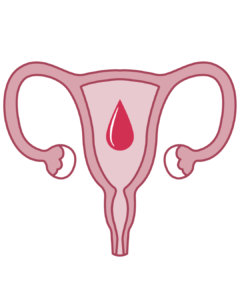
One of the first systems to be affected is the reproductive system.


From your body’s perspective, reproduction is incredibly expensive. Supporting a pregnancy requires a tremendous amount of energy, so if your brain senses that resources are already limited, temporarily suppressing reproductive hormones is a protective adaptation. This is why many female athletes begin experiencing irregular or absent menstrual cycles when Low Energy Availability persists over time.


It’s important to emphasize that this isn’t your body “malfunctioning.” It’s actually doing exactly what it was designed to do when it perceives that energy is limited.


Unfortunately, while this adaptation may have been helpful throughout human evolution, it comes with consequences when it continues for weeks or months.
“Does This Mean I’m Not Healthy?”

This is often the next question athletes ask, and understandably so.


After all, many female athletes who lose their period may appear healthy. They may be performing well, they’re strong, and they may even be achieving personal bests. Some have never been told that anything is wrong.


The challenge is that our bodies are remarkably good at compensating—until they aren’t.


Low Energy Availability doesn’t usually announce itself overnight. Instead, it often develops gradually, and many athletes adapt to feeling a little more tired, a little sorer, or a little slower to recover without realizing anything has changed. Because these changes happen over time, it’s easy to attribute them to harder training, a busy schedule, or simply the realities of being an athlete.


A missing period is often one of the clearest signs that your body has been compensating for some time.


It isn’t the only sign, but it’s one that’s difficult to ignore once you know what it means.

"Can This Happen Even If I'm Not Underweight?"

Absolutely.


In fact, this is one of the biggest misconceptions surrounding menstrual dysfunction in athletes.


Many people assume that periods only stop when someone becomes significantly underweight. While body weight can certainly influence reproductive hormones, it’s far from the only factor. What matters most is whether your body has enough energy available to support all of its physiological functions after accounting for the demands of training.


This is why athletes of every body size can experience Low Energy Availability and lose their menstrual cycle.

We see this often in clinical practice. An athlete may be eating three balanced meals a day, maintaining a stable weight, and performing well in their sport, yet still not be meeting the energy demands created by training. Sometimes it’s because training volume has increased without a corresponding increase in nutrition. Other times, it’s because they’re unintentionally filling up on foods that are nutritious but not particularly energy-dense, making it difficult to consume enough overall fuel. In other cases, years of dieting or trying to “eat clean” have gradually shifted eating patterns in ways that no longer support their body’s needs.


This is one of the reasons we encourage athletes to move away from using weight as their only measure of health. Your body doesn’t decide whether to produce reproductive hormones based solely on the number on the scale. It responds to whether it has enough energy available to carry out all of the jobs you’re asking it to do.

"Why Does My Period Matter If I Don't Want Children?"

This is another question we hear all the time, and it’s an important one.


Many athletes associate their menstrual cycle with fertility, so if pregnancy isn’t something they’re thinking about, it can be difficult to understand why a missing period deserves attention.


The reality is that your menstrual cycle reflects much more than your ability to become pregnant.


The hormones involved in regulating your cycle—particularly estrogen—play an important role throughout the body. They contribute to bone formation, cardiovascular health, cognitive function, mood, and recovery. When estrogen levels remain low because of prolonged Low Energy Availability, it’s not just your reproductive system that’s affected.


This helps explain why athletes experiencing menstrual dysfunction may also notice recurring bone stress injuries, slower recovery between training sessions, persistent fatigue, or feeling like they’re no longer adapting to training in the way they once did.


It’s also why many healthcare professionals now consider the menstrual cycle to be a vital sign. Like changes in heart rate or blood pressure, it provides valuable information about how your body is functioning as a whole.

"If I Feel Fine, Do I Really Need to Worry About It?"

One of the challenges with Low Energy Availability is that it often develops gradually.


Your body is remarkably good at adapting, and many athletes become accustomed to feeling more tired than usual or needing longer to recover. They assume that’s simply what comes with training harder or competing at a higher level.


Some athletes don’t experience obvious symptoms until they develop a stress fracture. Others notice recurring illnesses, declining performance, or increasing fatigue before realizing something isn’t quite right.


A missing period is often one of the earliest objective signs that your body is under more physiological stress than it can comfortably manage.


That doesn’t mean every athlete who loses their period will develop long-term complications. However, it does mean it’s worth paying attention rather than hoping it will resolve on its own.


The earlier Low Energy Availability is identified, the easier it is to address before more significant health consequences develop.

"Does This Mean I Have to Stop Training?"

This is often the question athletes are most afraid to ask.


Many worry that if they mention their missing period, the first thing they’ll be told is to stop exercising altogether.


Fortunately, recovery is rarely that black and white.


The goal isn’t to convince athletes to give up the sports they love. Instead, it’s to create enough energy availability for the body to support both training and health.


For some athletes, that means increasing overall energy intake. Others benefit from improving the timing of their nutrition, increasing carbohydrate intake around training, modifying exercise temporarily, or addressing disordered eating patterns that have gradually become normalized.

Every situation is different, which is why recommendations should always be individualized. A recreational runner training three days a week won’t necessarily require the same approach as an elite swimmer completing multiple training sessions each day.


What matters is understanding why your period stopped in the first place and working with a healthcare team that can help you restore adequate energy availability while considering your athletic goals.


One of the most encouraging things we see in practice is that many athletes don’t simply regain their menstrual cycle during recovery—they often begin recovering better, feeling stronger in training, and enjoying their sport more. When your body has enough energy to support both health and performance, those goals become much more aligned than many athletes expect.

Looking Ahead

If you’ve lost your period, the good news is that in many cases it’s reversible once the underlying cause is addressed. Recovery doesn’t happen overnight, and it often requires challenging beliefs that have become deeply ingrained within sport, but it is absolutely possible.


In our next article, we’ll explore what restoring your menstrual cycle actually looks like, including why “just eat more” is rarely helpful advice, how much recovery varies from one athlete to another, and the practical steps that can help support your body through the process.

Final Thoughts

For years, female athletes have been told that missing periods is simply part of training hard. 


Fortunately, that’s beginning to change. More coaches, physicians, and sports dietitians are recognizing the menstrual cycle for what it is: an important indicator of health, recovery, and adequate fueling. We hope this article helps you see your period not as an inconvenience or a sign of weakness, but as valuable information about how your body is doing.


While menstrual dysfunction is common in sport, it’s a sign that deserves attention—not because your body is failing, but because it’s adapting to the information it’s receiving. Understanding why your period has stopped is the first step toward supporting both your long-term health and your athletic performance.


At Fueling for Recovery, we believe athletes shouldn’t have to choose between performing well and being healthy. With the right support, it’s possible to fuel your body in a way that allows you to continue pursuing the sport you love while protecting your bones, hormones, recovery, and overall well-being.


If you’ve noticed changes in your menstrual cycle or are wondering whether Low Energy Availability may be affecting your health, our sports dietitians are here to help. Together, we can better understand what’s going on and develop a plan that’s tailored to both your body and your goals.


If this resonated with you and you would like help, book an appointment with a dietitian to help you navigate your recovery journey. Don’t hesitate to contact us at info@fuelingforrecovery.com or 202- 738-4726 if you have any questions. 

Written By: Annyck Besso, Registered Dietitian and Founder of Fueling for Recovery

Related Posts

Scroll to Top